

The Offshore Trap: Common Hiring Pitfalls and Why Pakistan May Be a Good Opportunity
Many U.S. companies overlook Pakistan as an offshore partner, falling into common hiring pitfalls. Learn how to avoid these mistakes and tap into Pakistan's vast tech potential for sustainable, high-value partnerships.
In recent years, many U.S. companies looking to outsource have gravitated toward obvious choices, such as India or Eastern Europe, but Pakistan is emerging as one of the most compelling offshore partners. However, even with this promise, there are common pitfalls that firms should navigate carefully. By avoiding these mistakes, U.S. firms can tap into Pakistan's vast tech potential while building a sustainable, high-value offshore partnership.
Common Pitfalls When Hiring an Offshore Firm And How Pakistan Mitigates Them
1. Misjudging Cost vs Quality
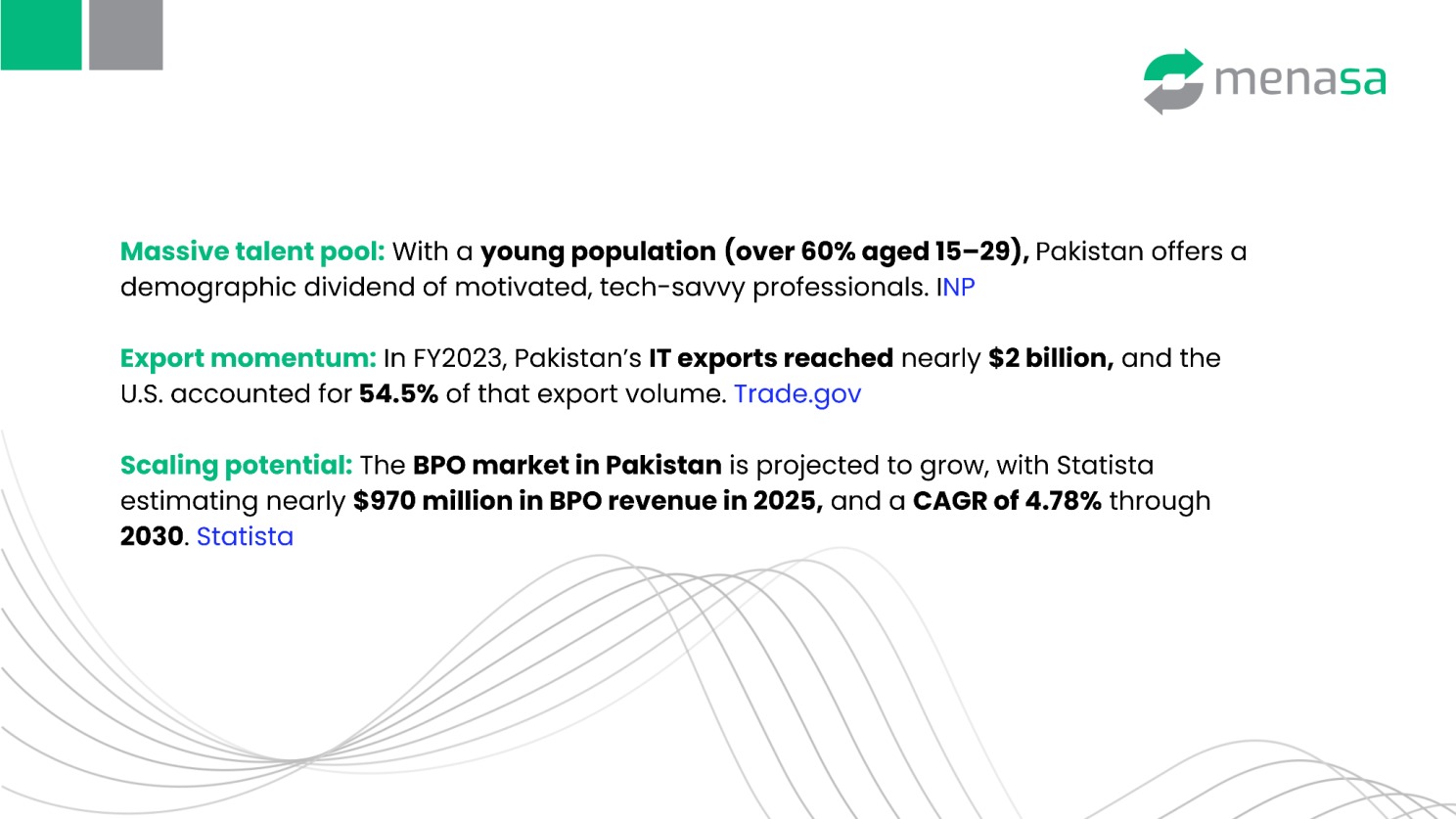
A frequent mistake is assuming "low cost = low quality." While Pakistan offers cost-competitive rates (labour costs can be significantly lower than in the U.S.), this does not mean compromising on talent. Pakistan's IT sector includes more than 500,000 professionals, many of whom are highly skilled in modern technologies. PACRA The Pakistan Software Export Board (PSEB) supports over 17,000 IT and ITeS firms with expertise in custom software, ERP, and business process outsourcing. Thus, U.S. firms can achieve both quality and savings when vetting carefully and leveraging reputable local providers.
2. Overlooking Infrastructure Risk
Offshore projects often derail when the provider lacks stable infrastructure, such as reliable internet or power. Pakistan does face challenges, especially in more remote regions. Payoneer, but many established Pakistani tech firms are based in strong tech hubs, Karachi, Lahore, and Islamabad, where infrastructure is more reliable. Business Recorder Moreover, the government and PSEB have made consistent investments in technology parks, incubators, and telecom infrastructure to support export growth. PACRA Because of this, U.S. firms can structure partnerships by prioritising vendors located in these hubs, reducing risk.
3. Ignoring Cultural and Communication Barriers
Cultural misalignment or communication lag can be a real problem in outsourcing. But Pakistan has a strong advantage here: a large share of its IT workforce is English-speaking, and many graduates come from local institutions versed in global software practices. invest.gov.pk Furthermore, the time-zone gap between Pakistan and the U.S. (GMT+5) is manageable for overlap, enabling real-time collaboration. Payoneer. To avoid miscommunication, U.S. firms should prioritise Pakistani firms that have proven experience with Western clients, clear project governance, and transparent workflows.
4. Failing to Evaluate Business Continuity and Risk
Some offshore partnerships fail because of political or economic instability in the vendor's country. While Pakistan has macro challenges, its IT industry has shown resilience and growth. According to recent reports, its ICT exports reached $1.94 billion in FY2023, with more than half of that going to the U.S. market. Trade.gov, The Global Services Location Index by Kearney, even ranked Pakistan as the most financially attractive IT outsourcing destination. pakistangulfeconomist.com For U.S. companies concerned about risk, partnering with well-established players backed by bodies like PSEB provides stronger continuity guarantees.
5. Underestimating Regulatory and Contractual Complexity
Firms often neglect the legal and fiscal terrain of offshore outsourcing. In Pakistan, the PSEB enables 100% equity ownership, full repatriation of capital and dividends, and income tax credits for IT exports (at least until 2025). Wikipedia. This creates a favourable business environment for U.S. partners, but diligent legal planning is essential. U.S. firms should invest in structured contracts, IP protection clauses, and clear service-level agreements (SLAs) to safeguard their interests.
Why U.S. Firms Should Seriously Consider Pakistan as an Offshore Partner
Putting aside the pitfalls, the case for partnering with Pakistan is strong and growing. When U.S. companies outsource, they often stumble by misjudging cost, underestimating infrastructure risk, or failing to build strong governance structures. But if they approach Pakistan thoughtfully, picking vetted firms, building strong contracts, and aligning with local hubs, they can unlock a dynamic, cost-efficient, and highly skilled tech ecosystem. In 2025 and beyond, Pakistan is not just an alternative outsourcing destination; it is a strategic partner for innovation and sustainable growth.

Faruk Bhagani is the founder of MenasaBD, with over 25 years of experience in international business development and enterprise partnerships. He has facilitated over $250M in deals across emerging markets and established the 147-point vetting protocol used to evaluate vendor partners.