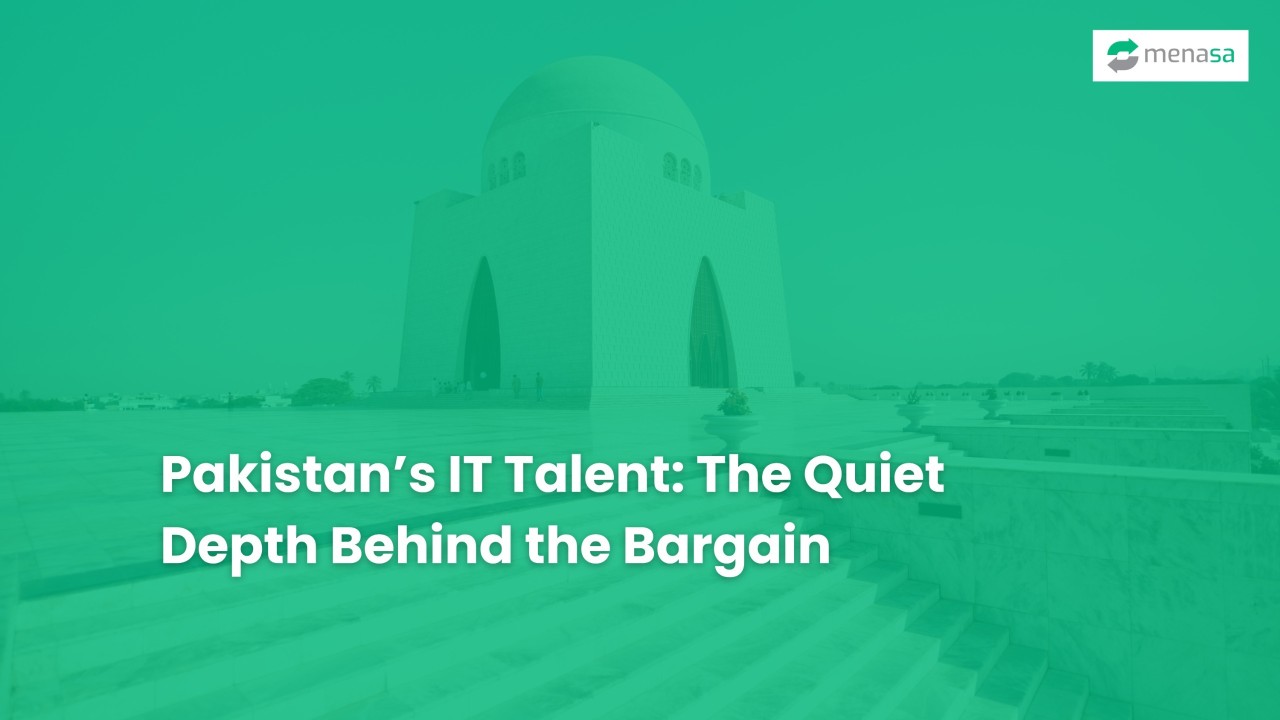


Pakistan's IT Talent: The Quiet Depth Behind the Bargain
Pakistan's tech story is no longer only about low-cost labour—it's about depth. Explore how the country has graduated thousands of engineers and scaled boutique product shops into export-focused firms.
Pakistan's tech story is no longer only about low-cost labour; it's about depth. Over the past few years, the country has graduated thousands of engineers and designers, scaled boutique product shops into export-focused firms, and produced a thriving freelance ecosystem able to deliver high-quality work for global clients. The numbers back the momentum: IT and IT-enabled services exports have surged, reaching record highs and becoming one of Pakistan's fastest-growing foreign-exchange earners.
Growth in Numbers: The Evidence Speaks
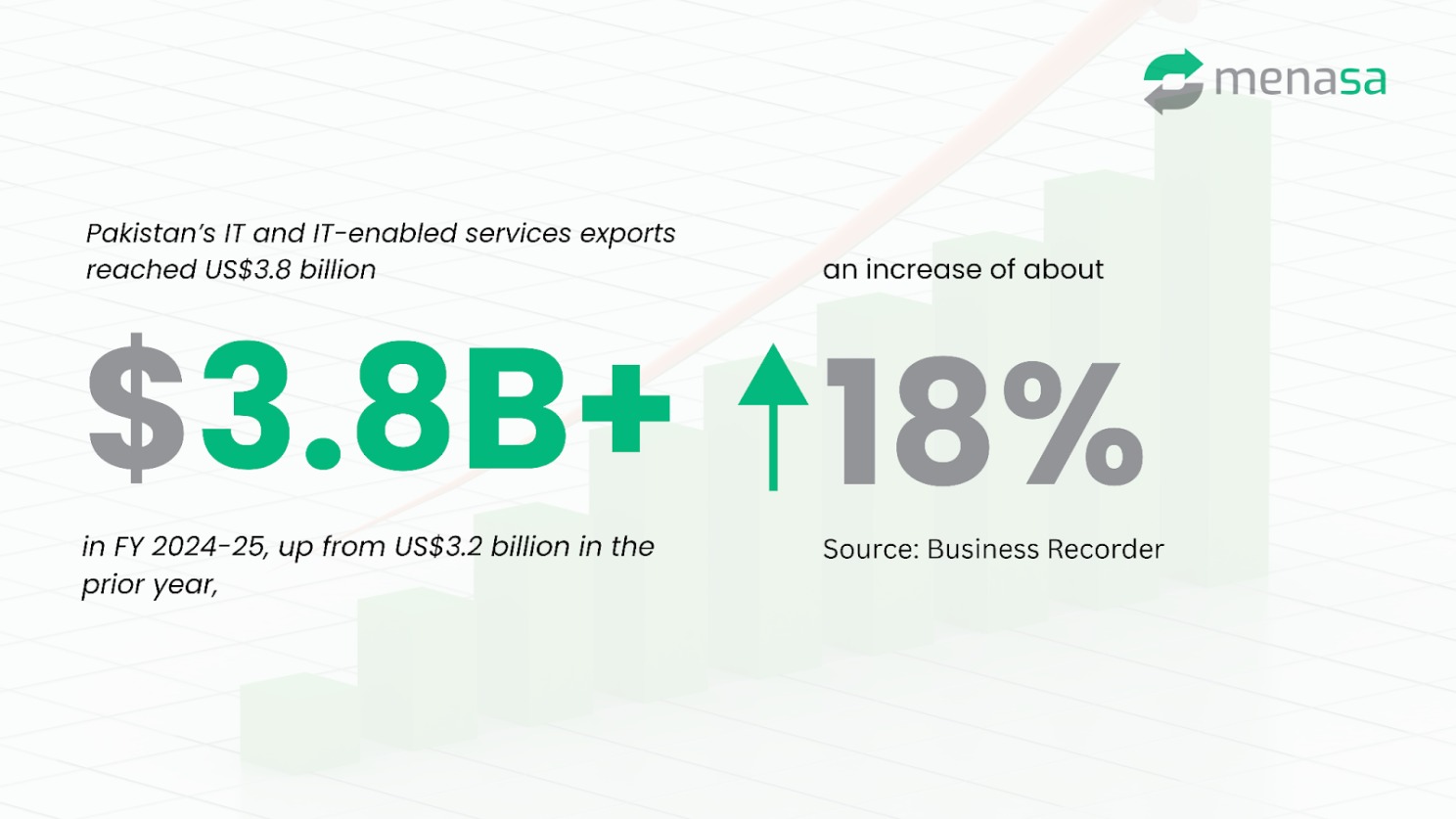
Pakistan's IT and IT-enabled services exports reached US$3.8 billion in FY 2024-25, up from US$3.2 billion in the prior year, an increase of about 18%. Business Recorder
Earlier, ICT (information & communication technology) export remittances hit around US$2.283 billion for the July-March period of FY 2023-24, marking a 17.4% year-on-year rise. Business Recorder
These figures demonstrate not just incremental growth, but accelerating capability and global engagement.
What gives Pakistan an edge is the intersection of talent volume, language capability, and real-world product experience. Large university intakes produce a steady pipeline of graduates; major cities, Karachi, Lahore, and Islamabad, host mature engineering teams working on SaaS, fintech, and mobile products. English proficiency is above the global average in many urban centres, which smooths collaboration with Western product and design leads.
Depth of Talent: Beyond Numbers
The raw export figures tell one part of the story. The other is about the capacity—in terms of human capital, technical skills, language and global frameworks. For example:
- Pakistan reportedly has more than 20,000 IT / ITeS companies registered with the regulatory body. Business Recorder
- Historical data suggests the industry employed 500,000+ professionals as of a few years ago, and created about 20,000 graduates/engineers annually. pacra.com
- Anecdotally, founders abroad note that engineers in Lahore or Karachi are fully capable of shipping scalable systems, designers meeting global UI/UX expectations, and freelancers delivering world-class output—not merely cost-arbitrage but "competitive quality at better value".
Why Pakistan's IT Talent Matters for Global Teams
Putting the performance and depth together, there are some practical takeaways:
- With exports growing robustly, Pakistani tech teams are increasingly integrated into global value chains.
- The English-language proficiency and time-zone overlap (for MENA, Europe) make collaboration smoother.
- The cost-value equation is favourable: you're not just hiring cheaply, you're hiring capable, with an opportunity for scale.
- For founders building distributed teams, Pakistan offers a "mid-senior" bracket of engineering and product talent that can ship high-impact work, especially when paired with strong leadership and process.
So, how should global teams and investors read Pakistan's capability depth? Practically: treat Pakistan as an emergent centre of engineering and product talent, one with strong mid-to-senior capabilities, especially for backend, mobile, and product-design execution—while accounting for operational risk and investing in onboarding, mentorship, and quality controls. Clients who pair local teams with clear product leadership and robust CI/CD, security, and communication practices tend to unlock the best outcomes.
Pakistan as a Strategic Choice
Taken together, Pakistan's IT sector no longer needs to be viewed simply as a "low-cost" alternative. It is evolving into a capability-rich partner for global tech execution. Given the export growth (US$3.8 billion) and the growing body of talent, here's how to think of Pakistan:
- It's a scaling hub, especially strong in backend, mobile, SaaS, design and full-stack engineering.
- With intentional structuring, it can serve as a centre of excellence for global teams needing to complement their on-shore presence.
- For companies willing to enable processes, invest in integration and treat the Pakistan team as part of their global fabric (not only as "outsourced"), the returns can be strong.
Pakistan's tech talent has matured from a cost play into a capability play. The evidence—rising exports, active freelancing markets, and lived founder experiences—suggests a market ready to contribute meaningfully to global product roadmaps. The remaining work is structural: better infrastructure, education-to-employment bridges, and policy certainty. Solve those, and Pakistan's depth becomes a strategic advantage, not just a competitive price point.

Faruk Bhagani is the founder of MenasaBD, with over 25 years of experience in international business development and enterprise partnerships. He has facilitated over $250M in deals across emerging markets and established the 147-point vetting protocol used to evaluate vendor partners.