

What Makes Pakistan a Great Destination for Global Capability Centres
In today's global services landscape, multinational enterprises are seeking destinations that offer cost efficiency, high-quality talent, and operational resilience. Pakistan is emerging as a highly attractive location for Global Capability Centres.
In today's global services landscape, multinational enterprises are seeking destinations that offer a powerful combination of cost efficiency, high-quality talent, scalability, and operational resilience. Pakistan is emerging as an underrecognized yet highly attractive location for Global Capability Centres (GCCs). With a rapidly growing pool of STEM and IT professionals, competitive cost structures, and an increasingly stable business environment supported by favourable policies and infrastructure initiatives, Pakistan enables companies to establish GCCs that are not only cost-efficient but also capable of driving innovation, analytics, and high-value technology delivery at scale.
A Young, Skilled, and Scalable Workforce
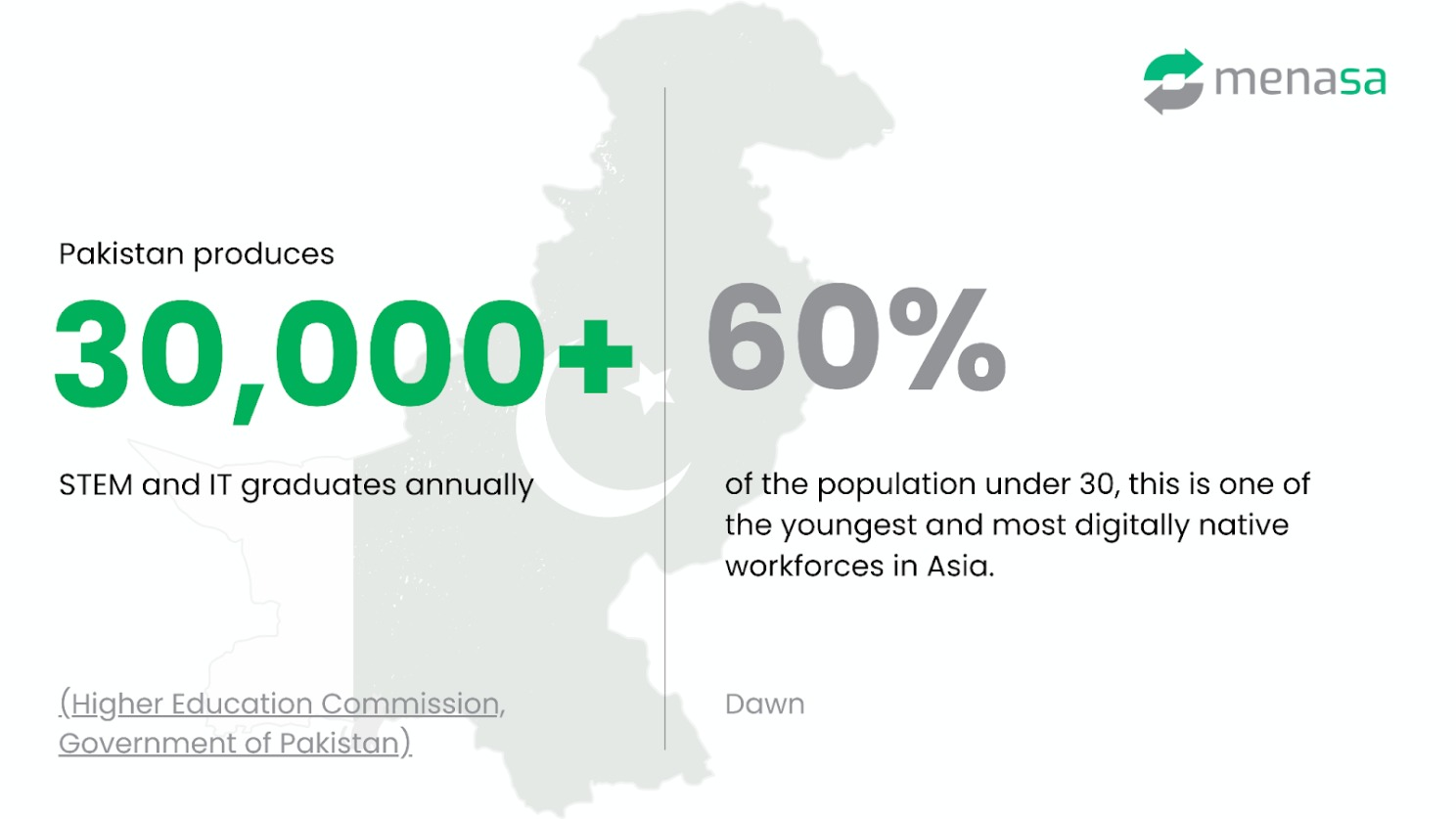
Pakistan's biggest competitive edge lies in its people. The country produces over 30,000 STEM and IT graduates annually (Higher Education Commission, Government of Pakistan), many of whom are trained in cutting-edge domains such as AI, data engineering, and cybersecurity. With 60% of the population under 30, this is one of the youngest and most digitally native workforces in Asia.
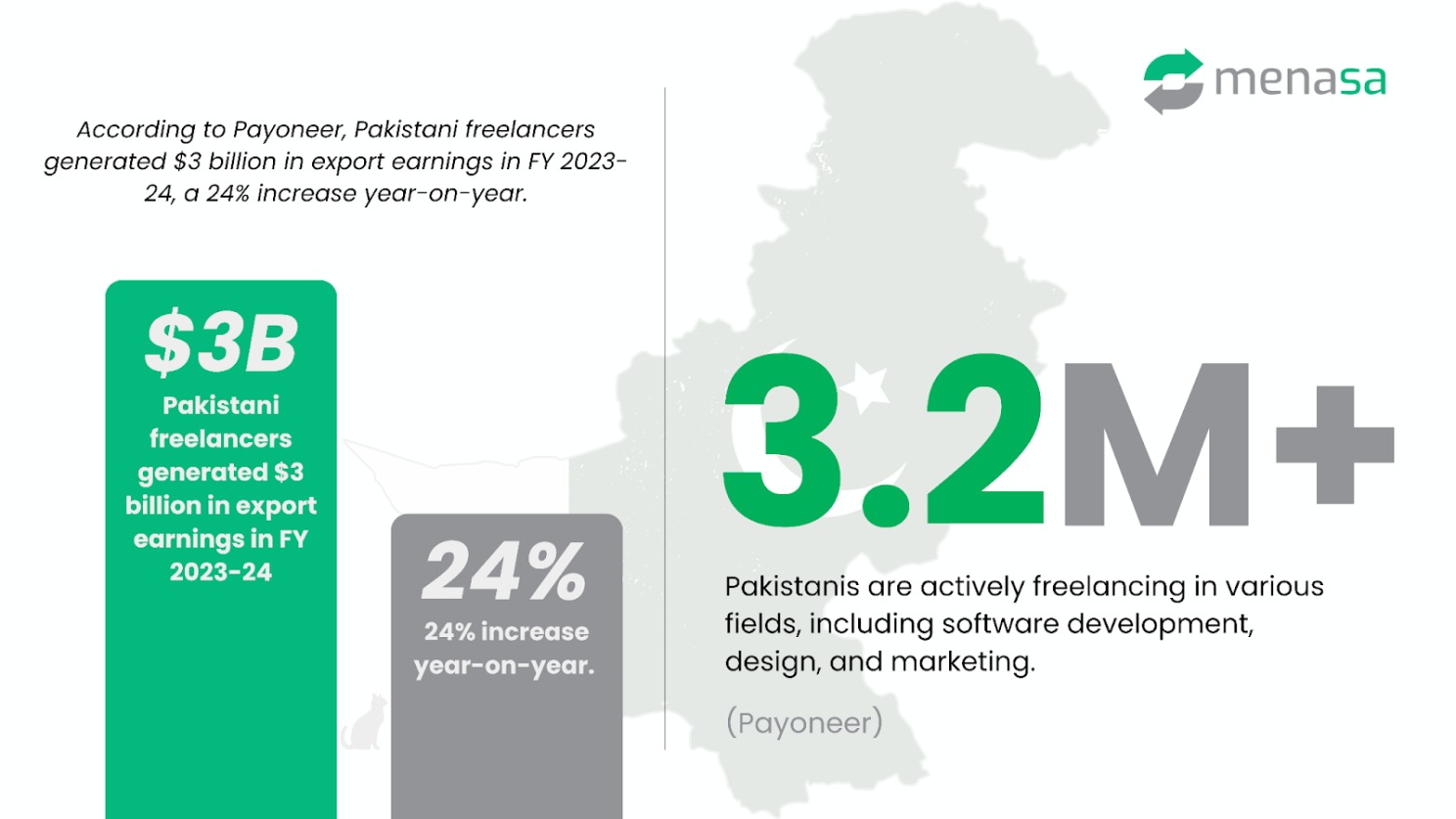
Pakistan has a large and growing base of freelancers working globally. According to Payoneer, Pakistani freelancers generated $3 billion in export earnings in FY 2023-24, a 24% increase year-on-year. Over 3.2 million Pakistanis are actively freelancing in various fields, including software development, design, and marketing. But it's not just quantity, it's global readiness. Pakistan consistently ranks among the top nations in freelance/digital services exports, particularly in freelance IT services (Payoneer, 2023), a testament to the technical competence, English proficiency, and remote collaboration skills of its professionals. Companies that set up GCCs in Pakistan can tap into a deep pool of engineers, analysts, and designers already delivering to international standards.
For enterprises facing tech talent shortages in mature markets, Pakistan offers a solution: a skilled, affordable, and ready-to-scale workforce.
The Cost Advantage That Fuels Capability
Cost competitiveness has always been Pakistan's entry point, but today, it's an enabler of capability, not a substitute for it.
Average IT labour costs are lower than in India or Latin America, yet productivity and technical depth continue to rise. The result is a high return on investment for companies seeking to expand engineering, analytics, or support operations without compromising quality.
Pakistan's IT and BPO exports crossed $3.9 billion in FY2024 (Payoneer), and the sector continues to grow at double-digit rates despite global headwinds. This demonstrates operational maturity and a proven ability to deliver at scale.
For global firms, this means one thing: Pakistan offers the economics of cost efficiency with the capability of a developed talent ecosystem.
A New Era of Stability and Business Confidence
The third factor—geopolitical stability—is where Pakistan's narrative is changing the fastest. Following several years of volatility, Pakistan has entered a phase of relative macro and regional stability, underpinned by defence and strategic cooperation agreements with key global partners (Reuters, 2025). This doesn't mean instant prosperity, but it does mean predictability—the one ingredient investors value most when making multi-year commitments.
On the business front, the Special Technology Zones Authority (STZA) is redefining how global tech firms operate in Pakistan. The framework offers 10-year tax holidays, duty exemptions, fast-track regulatory approvals, and plug-and-play infrastructure (Government of Pakistan, STZA Act, 2021). For enterprises, that's not just an incentive—it's assurance.
A Quantified, Validated Opportunity
The GCC landscape is evolving from "low-cost delivery centres" to high-value hubs of innovation and intelligence.
Countries that offer the right mix of talent, cost, and confidence will define the next decade of global enterprise operations. Pakistan stands at that intersection today—young, capable, and finally, stable enough to be taken seriously.
For global enterprises planning their next capability expansion, Pakistan isn't a risk—it's an opportunity waiting to be claimed.

Faruk Bhagani is the founder of MenasaBD, with over 25 years of experience in international business development and enterprise partnerships. He has facilitated over $250M in deals across emerging markets and established the 147-point vetting protocol used to evaluate vendor partners.