

Pakistan's Perception Problem: Why the Headlines Miss the Real Story
When the world sees Pakistan, the image is often dominated by politics and headlines about instability. But the country's deeper narrative is far more complex and promising, with a thriving tech ecosystem and growing digital economy.
When the world sees Pakistan, the image is often dominated by politics, turmoil, headlines about instability, and governance risk. But the country's deeper narrative is far more complex and far more promising. The problem is not just what is happening; it is how the world interprets what is happening. And that interpretation is costing Pakistan in global capital flows, talent attraction, and narrative control.
The Headlines: Politics, Inertia, and Assumptions
International coverage routinely frames Pakistan through a lens of political volatility, frequent changes in government, IMF programmes, currency gyrations, and security concerns. These stories are real, but they are partial. They overshadow the human capital, the digital economy growth, and structural stabilisation that often go unreported.
Because so much of global perception is shaped by the media, but so little of the nuance is communicated, investors and partners often draw the blunt conclusion: "High risk, low reward." That perception is sticky.
The Reality: Economic Indicators Tell a Different Story
Here are some facts that suggest Pakistan's story is far more nuanced and, in some respects, positive:
-
GDP Growth data shows the economic rebound has begun, driven by human capital rather than mere policy headlines.
-
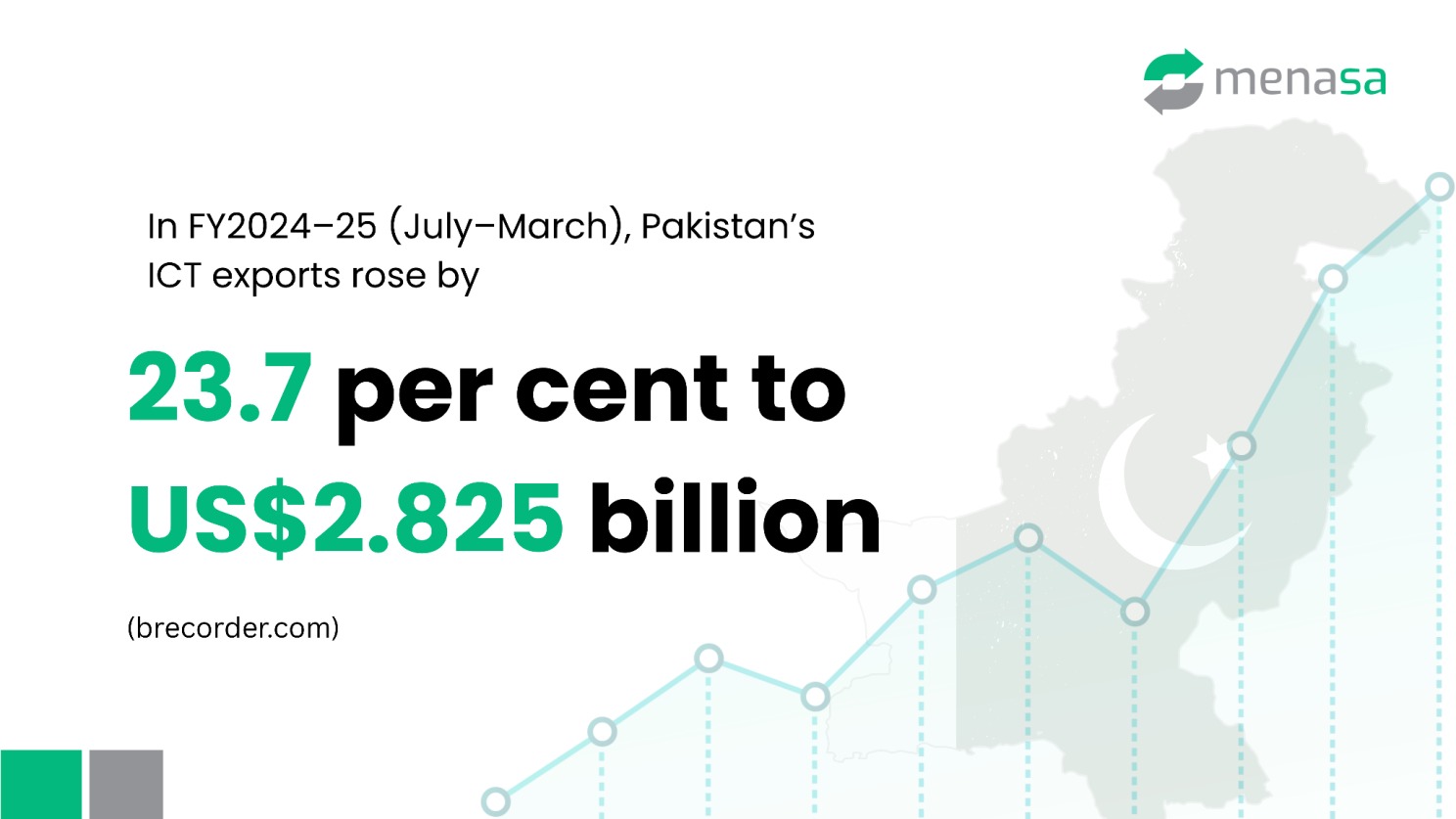
In FY2024–25 (July–March), Pakistan's ICT exports rose by 23.7 per cent to US$2.825 billion. (brecorder.com)
-
The trade surplus in the IT and IT-enabled services sector reached about US$2.429 billion in the same period, the highest among all service industry categories. (nation.com.pk)
-
For the full FY2024–25, the IT exports reportedly hit US$3.8 billion, marking roughly an 18 per cent increase over the prior year. (dawn.com)
-
In 2023, IT services constituted about 35 per cent of total services exports. (dawn.com)
These are not trivial numbers. What they show is a country that, even with structural headwinds, is moving. More importantly, moving in a direction aligned with global digital economy trends.
Why the Discrepancy: Perception vs. Reality
Pakistan's global image does not always reflect its real economic and talent potential. The perception lag is driven by several distinct factors:
- Narrative dominance of risk: Stories of political instability, currency crises, and defaults dominate headlines because they are dramatic and capture attention. Meanwhile, steady structural progress, such as growth in IT exports, startup innovation, and digital adoption, receives far less coverage.
- Limited storytelling on achievements: Global media and international narratives rarely highlight Pakistan's tech talent, IT service growth, and outsourcing capabilities. The public perception, therefore, emphasises problems over progress, even when measurable successes are happening on the ground.
- Investor caution due to weak law enforcement: Investors in startups and capital-intensive ventures are wary because weak enforcement of intellectual property and contractual laws creates real risks. Proprietary data, software, or capital assets can be vulnerable, which makes foreign direct investment into domestic-focused startups less appealing.
- Comparative framing bias: Countries are often judged based on headline politics rather than deeper metrics like talent availability, digital adoption, or service export growth. Pakistan is frequently compared to its neighbours or regional peers through this narrow lens, leading to an underestimation of its real capabilities.
Why US Tech Companies Should Consider Pakistan for Offshore and Outsourcing
Beyond the narrative debate, there is a tangible business case for US tech firms to look at Pakistan as a viable offshore location or partner for outsourcing services.
Talent pool and cost structure: Pakistan has a large, growing IT services ecosystem, with thousands of registered IT and IT-enabled service companies. (digitalpakistan.pk)
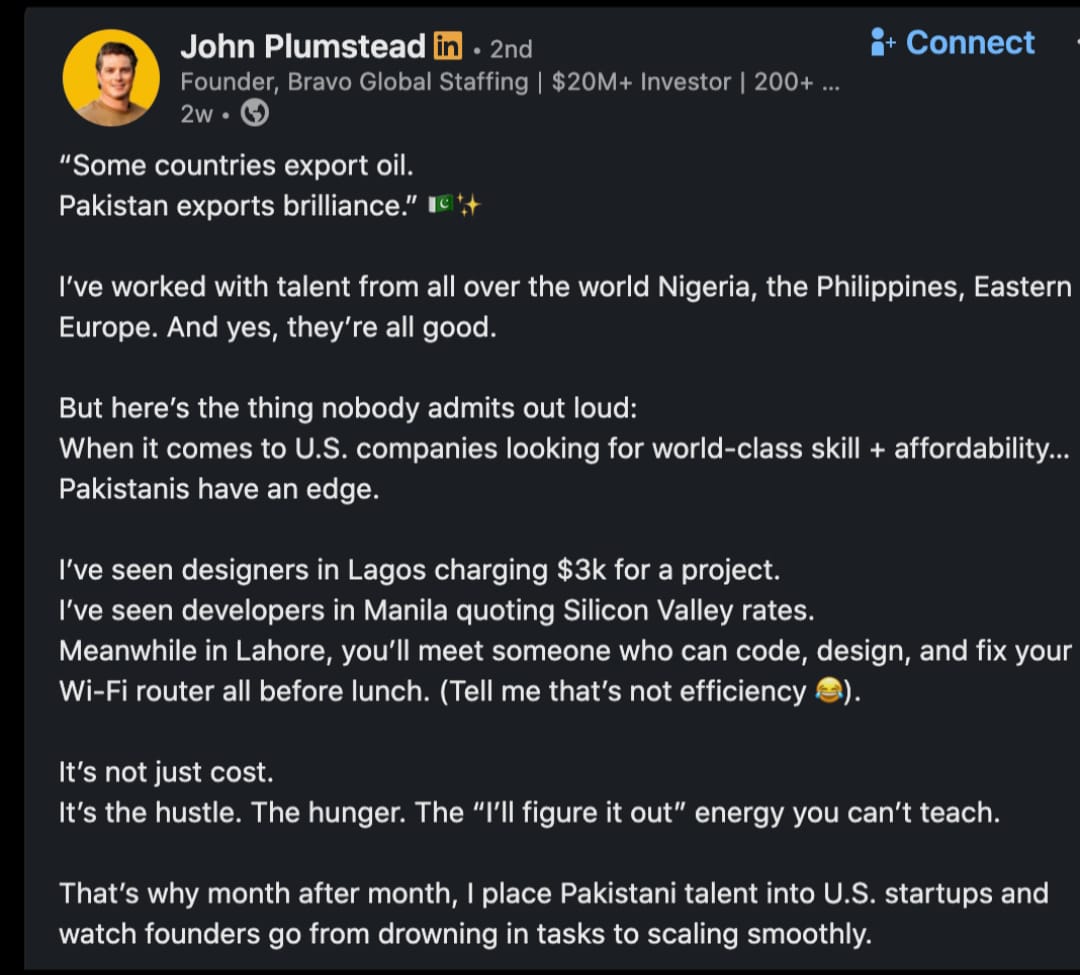
With lower labour costs compared to many Western and Eastern alternatives, and a timezone that covers both European and US nights and early mornings, Pakistan offers favourable arbitrage for software development, testing, QA automation, data analytics, and machine learning pipelines.
The English language capability of many Pakistani tech professionals is strong, making US coordination easier.
Export momentum as a proof point
The surge in ICT exports of 23.7 per cent to US$2.825 billion and trade surplus in services indicates Pakistan's firms are increasingly oriented to global clients. (brecorder.com)
Since US tech leaders increasingly demand global delivery models and cost-effective talent, Pakistan's improving track record becomes a signal of reliability, not just risk.
Digital infrastructure and ecosystem readiness: Pakistan's internet and telecom infrastructure have improved, with nearly 200 million telecom subscribers and modern 4G coverage at high percentages. (profit.pakistantoday.com.pk)
Government initiatives such as training platforms like DigiSkills.pk are building a pipeline of digital talent ready for global projects. (digitalpakistan.pk)
For US firms, the ability to scale offshore operations in a lower-cost country that is moving up the value chain into software, AI, and analytics is increasingly important. Pakistan is demonstrating that shift.
Risk mitigation can be managed: Politics matter, but choosing an offshore destination is about balancing cost, talent, risk, and scalability. Pakistan's improving track record suggests risk is being addressed, not ignored.
With the right governance, partner selection, IP protections, and hybrid onshore-offshore model, US companies can structure engagement with Pakistani firms in low-risk, high-return ways.
Changing the Narrative: How to Shift Perceptions
Shifting perception takes intentional work. Here are some ways Pakistan can move the needle:
- Showcase success stories: Focus on the people and companies driving digital exports of US$3.8 billion, the young talent streaming into IT, and the growth in freelancing.
Success Stories:
1. Securiti AI (founder: Rehan Jalil)
- According to multiple media reports, Securiti AI, a cybersecurity/data governance firm founded by Rehan Jalil (Pakistani-born), was acquired by Veeam Software for US$1.725 billion. Business Recorder
- The article noted: "Cybersecurity and data protection infrastructure startup Securiti AI, founded by Pakistani Rehan Jalil, was acquired by Seattle-based Veeam Software for $1.725bn." Business Recorder
- This provides a high-impact proof point: a global exit with Pakistani founder credentials.
2. Jams (co-founders: Asad Awan & Hamza Aftab)
- Generative-AI startup Jams, co-founded by former Meta engineers Asad Awan and Hamza Aftab, has been acquired by OpenAI (according to Pakistan business media). Business Recorder
- The Brecorder article states: "In a major milestone for Pakistan's tech ecosystem, generative AI startup Jams, co-founded by Asad Awan and Hamza Aftab, has joined OpenAI... The acquisition also marks Indus Valley Capital's first exit..." Business Recorder
- This underscores Pakistani-origin founders participating in cutting-edge global tech, beyond purely domestic markets.
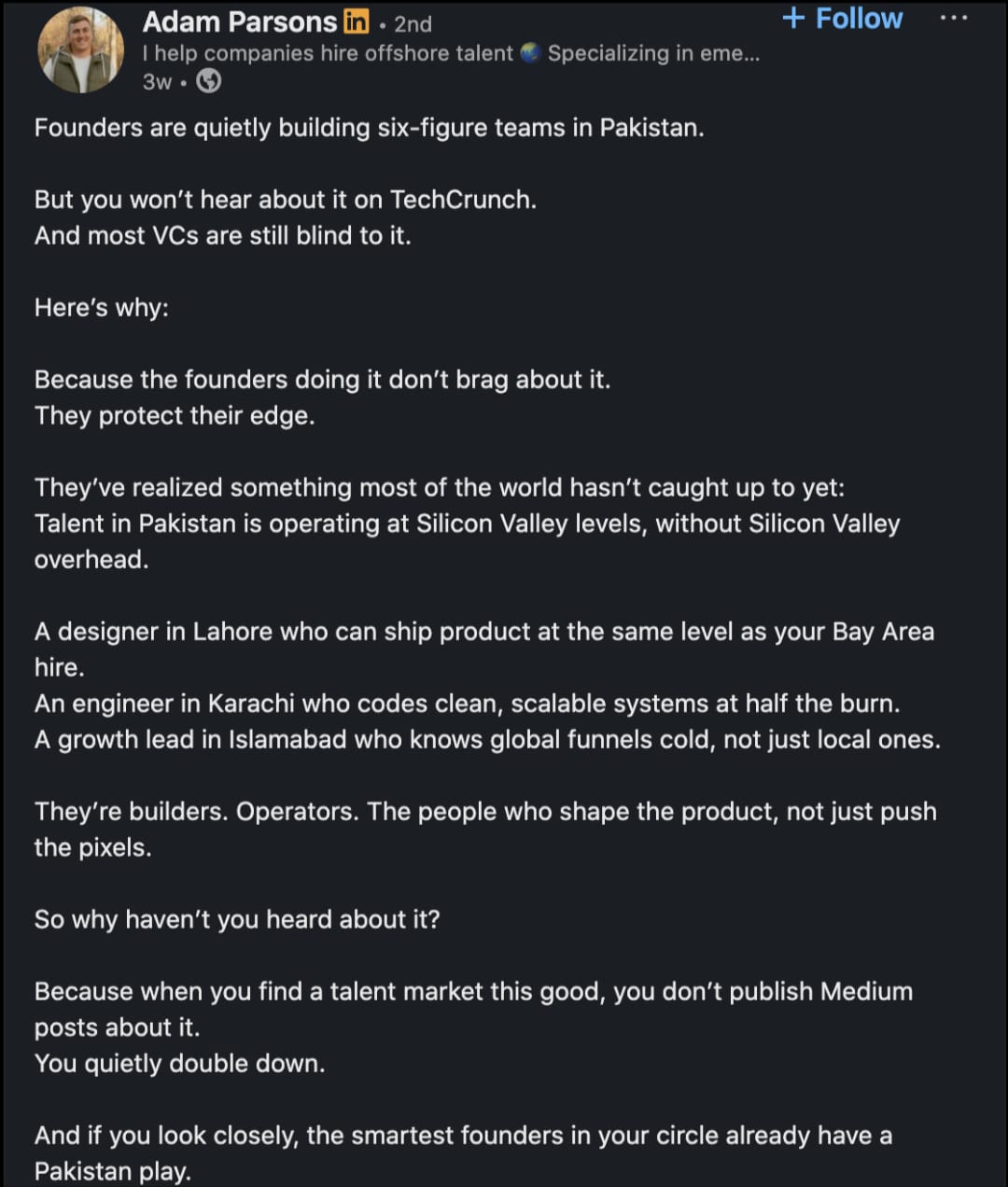
- Data-driven proof points: Use statistics to counter narrative bias and show that progress is measurable.
- Engage international media and platforms: Get Pakistani voices into global tech and finance outlets, not just crisis stories.
- Leverage diaspora and digital influence: Pakistani professionals abroad and remote workers can help shape the story of capability and professionalism.
- Align policy with signal: Government and industry must work together to reduce friction, such as tax, regulatory clarity, and infrastructure, so that the improving metrics get translated into tangible foreign investor behaviour.
Conclusion
It is tempting and easy to judge Pakistan solely through the prism of its politics. But doing so is like evaluating a company by its quarterly headlines without looking at its talent, innovation, business model, and trajectory.
Pakistan's real asset is its people: a young, tech-savvy, globally connected workforce that is increasingly export-oriented. The macro numbers are modest compared to some neighbours, but they are improving and, importantly, under-recognised.
Closing the perception gap will not happen overnight. By aligning narrative with reality, Pakistan can begin to claim a space not just as a governance case study but as a digital services and talent powerhouse. In the global economy, perception is often the first investment hurdle. Pakistan's current challenge is less about fixing the narrative than making sure the narrative reflects the reality.

Faruk Bhagani is the founder of MenasaBD, with over 25 years of experience in international business development and enterprise partnerships. He has facilitated over $250M in deals across emerging markets and established the 147-point vetting protocol used to evaluate vendor partners.